



Dr Kieron Lim
Senior Consultant Gastroenterologist
MBBS (University of London), MRCP (UK), FRCP (Edinburgh), FAMS (Gastroenterology)
The liver plays a vital role in filtering toxins, processing nutrients and supporting overall health. Any disruption to the function of this organ can affect the body in many ways. However, common liver conditions such as fatty liver disease and chronic hepatitis may not cause noticeable symptoms in their early stages. As a result, liver damage can sometimes progress silently before it is detected.
In order to identify potential issues while they are still in their early stages, regular checkups and appropriate screening tests are important, especially for individuals with risk factors for liver diseases.
A FibroScan test is a non-invasive imaging assessment test that can measure liver stiffness and fat content quickly and easily. It is often used to help detect liver scarring and damage, alongside other forms of assessment. Hepatology specialists often use these tests to evaluate the severity of liver conditions, monitor the progression of symptoms and changes and guide decisions regarding a patient's treatment.
What Does a FibroScan Test Do?
FibroScan tests utilise ultrasound-based technology to measure the stiffness and fat content of the liver. This technology is known as transient elastography, and allows a doctor to conduct a comprehensive assessment through the skin's surface.
By providing quantitative information about the condition of the liver in a non-invasive manner, a FibroScan can help doctors assess the presence and possible severity of liver disease. The test results are interpreted together with clinical findings, blood tests and other imaging studies to support diagnosis, risk stratification and ongoing monitoring where appropriate.
Advantages of a FibroScan Test
A traditional means of assessing liver scarring is a liver biopsy, which involves inserting a needle into the organ to collect a tissue sample. While biopsies are still used in selected cases, FibroScans provide a non-invasive alternative that most patients are more comfortable with.
A FibroScan evaluates liver health without the need for incisions or tissue sampling, and offers several practical advantages:
- Quick and well-tolerated: The procedure is typically completed within 10 to 15 minutes and is generally painless.
- Facilitates early evaluation: It may help detect liver stiffness or fatty change before symptoms become apparent in some individuals.
- Allows ongoing monitoring: As it is non-invasive, the test can be repeated periodically to monitor chronic liver conditions as part of follow up care.
FibroScan Process
There are several precautionary steps you will need to take throughout the FibroScan process.
Before
Your doctor may advise you to avoid eating or drinking for a few hours before the test, as fasting can help improve the accuracy of the readings. You should inform your doctor about any medical conditions or if you are pregnant. In most cases, no special preparation or medication adjustments are required.
Patients will need to wear comfortable, loose-fitting clothing that allows access to their upper abdomen. Piercings and jewellery near the testing area will need to be removed.
During
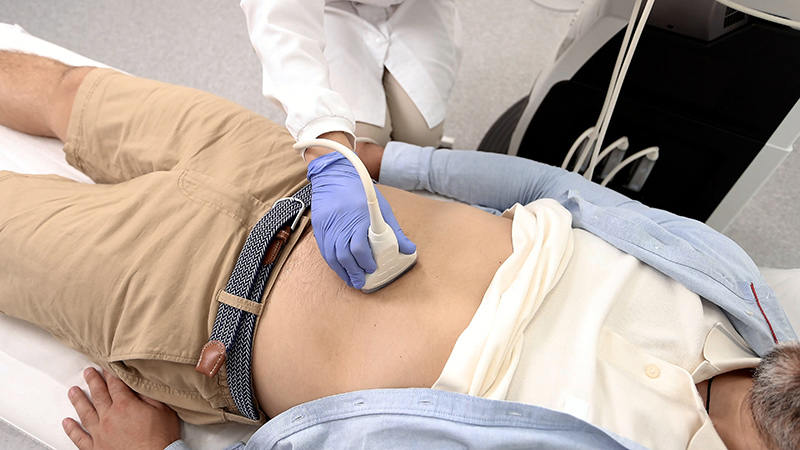
You will lie on your back with your right arm raised to allow access to the upper right side of your abdomen. A water-based gel is applied to the skin and a small probe is placed over the area of the liver. The device delivers gentle vibrations into the liver tissue to measure stiffness and fat content. The procedure is generally painless and takes about 10–15 minutes. Multiple readings are taken to ensure reliable results.
After
There is no downtime required after a FibroScan. You can usually resume normal activities immediately. A computer calculates the stiffness of your liver based on the measurements, and the results are often available on the same day. Your medical status will then be reviewed by your doctor, together with your clinical history, blood tests and any other relevant investigations.
What Medical Conditions Can a FibroScan Detect?
A FibroScan is commonly used to assess conditions that may lead to liver fibrosis or fatty change. By measuring liver stiffness and fat content, it can support the evaluation of:
- Non alcoholic fatty liver disease and metabolism-associated fatty liver disease
- Chronic hepatitis B and hepatitis C
- Alcohol-related liver disease
- Liver fibrosis and cirrhosis
- Other chronic liver disorders associated with ongoing inflammation or scarring
While a FibroScan does not diagnose every liver condition on its own, it provides useful information about the presence and possible severity of fibrosis.
When Should I Seek Out a FibroScan?
A FibroScan is most useful for identifying risk factors of liver fibrosis or fatty change. It is typically recommended by a doctor after an assessment, rather than serving as a routine test. However, if you are experiencing signs and symptoms of liver conditions, you may want to seek out a hepatologist for a consultation.
Persistent fatigue or weakness:
Ongoing tiredness without a clear cause may be associated with underlying liver conditions that warrant further evaluation.
Yellowing of the skin or eyes:
Jaundice can be a sign of impaired liver function and should be assessed promptly by a specialist.
Abdominal discomfort, particularly in the right upper abdomen:
Discomfort in this region may reflect liver or gallbladder involvement and merits clinical review.
Unexplained swelling of the abdomen or legs:
Fluid retention in these areas can be associated with advanced liver disease and requires further investigation.
Easy bruising or bleeding:
The liver plays a key role in producing clotting factors, and impaired function may manifest as increased bruising or bleeding tendency.
These symptoms do not always indicate liver disease, but they warrant further assessment. In appropriate cases, a FibroScan may be recommended as part of a comprehensive evaluation to assess liver stiffness and determine whether fibrosis or cirrhosis may be present.
Early Diagnosis For Gastroenterological Conditions
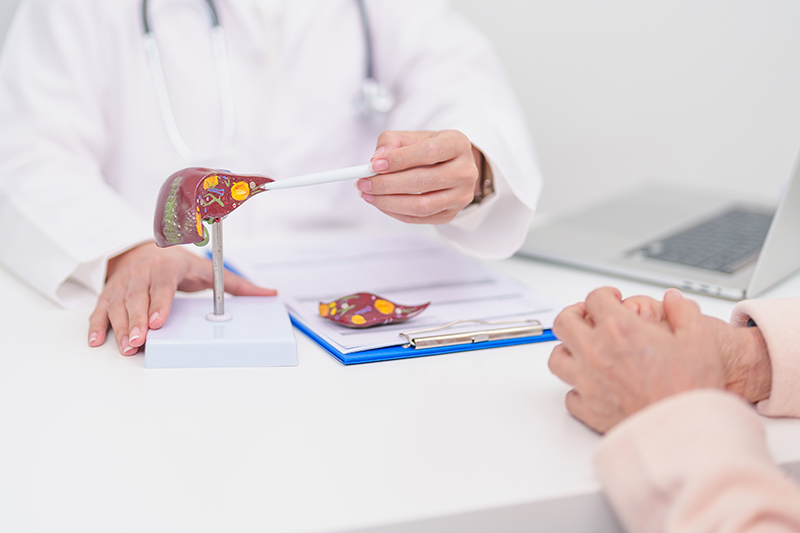
Early assessment plays an important role in the management of both liver and other gastroenterological conditions. Symptoms of liver conditions may warrant further evaluation, and a FibroScan is an easy and effective way of obtaining preliminary results.
In addition to FibroScan, doctors may recommend blood investigations, abdominal ultrasound, endoscopy or colonoscopy depending on your symptoms and risk profile. Seeking medical advice early allows for timely identification of potential issues and appropriate management before complications develop.
At Kieron Lim Gastroenterology, care is centred on identifying the underlying cause of your liver condition and tailoring management to your individual needs. Under the guidance of Dr Kieron Lim, our senior consultant gastroenterologist and hepatologist, patients receive comprehensive assessment and evidence-based care for conditions such as fatty liver disease, viral hepatitis and liver fibrosis.
Contact us today to arrange a detailed evaluation and discuss the appropriate next steps for your liver health.
Frequently Asked Questions (FAQs) About FibroScans
Can FibroScan detect liver cancer?
FibroScan cannot directly diagnose liver cancer. The test measures liver stiffness and fat content, which may reflect fibrosis or cirrhosis. Since cirrhosis is a known risk factor for liver cancer, abnormal FibroScan results may indicate a higher risk profile, but they do not confirm the presence of a tumour. If liver cancer is suspected, additional investigations such as blood tests, ultrasound, CT scans or MRI are required for proper evaluation and diagnosis.
How accurate are FibroScan results?
FibroScan is generally considered a useful and reliable tool for assessing liver stiffness and fatty change, particularly in chronic liver disease. However, its accuracy may be affected by certain factors such as obesity, narrow rib spaces or significant inflammation. In some individuals, reliable readings may be difficult to obtain. For this reason, results are always interpreted together with blood tests, imaging findings and clinical assessment rather than in isolation.
Is a FibroScan painful, or does it require a recovery time?
A FibroScan is usually well tolerated and does not involve needles or incisions. The probe delivers mild vibrations against the skin, which most patients describe as a light tapping sensation. The procedure typically takes about 10–15 minutes, and no sedation is required. Patients can return to their normal daily activities immediately after the test without any downtime.
Do I need to prepare for a FibroScan?
Some light preparation may be advised prior to the test. Patients are often instructed to avoid eating or drinking for a few hours beforehand, as fasting can improve the accuracy of the readings. Aside from this, no major preparation is usually required.
Can a FibroScan replace a liver biopsy?
FibroScans are able to replace liver biopsies as the initial means of assessment. It is particularly useful for monitoring fibrosis for known liver conditions. However, they do not completely eliminate the need for liver biopsies. These may still be recommended in situations where the liver disorder is unclear.

Meet Our Specialist
Dr Kieron Lim
MBBS, University of LondonMember, Royal College of Physicians (UK)Fellow, Academy of Medicine (Gastroenterology) SingaporeFellow, Royal College of Physicians (Edinburgh)
Dr Kieron Lim is a senior consultant specialising in Gastroenterology and Hepatology, providing comprehensive care for patients with gastrointestinal conditions in Singapore. His expertise extends to disorders affecting the oesophagus, stomach, colon, liver, pancreas, and gallbladder. Through his experience, Dr Lim enhances patient outcomes by facilitating early detection and timely medical interventions.

Location
Mount Elizabeth Medical Centre
3 Mount Elizabeth #10-02Singapore 228510
Contact Us
Whatsapp: (65) 9726 0495 | Telephone: (65) 6836 0080
Fax: (65) 6836 0090 | Emergency: (65) 6533 0088
Email: enquiries@kieronlimgastro.sg